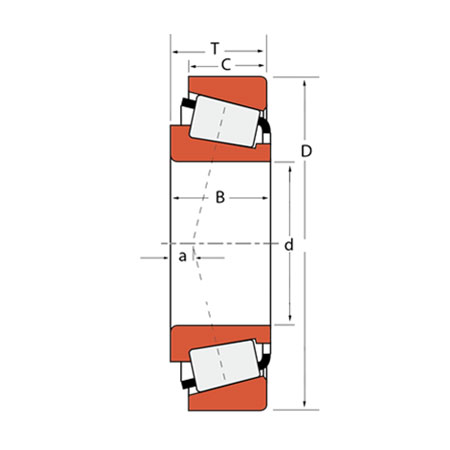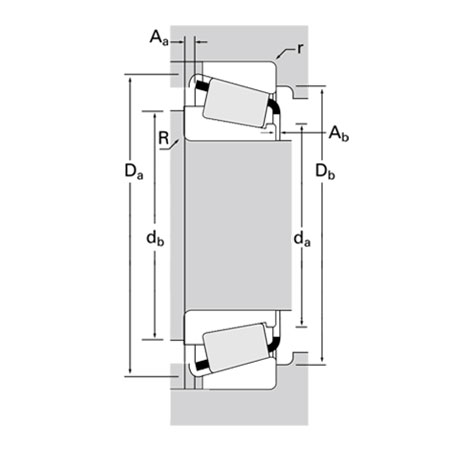
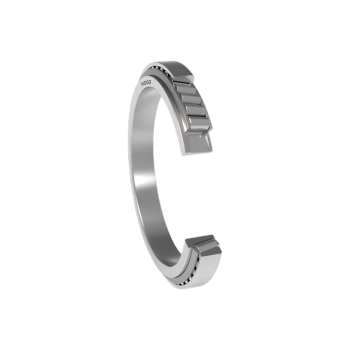
2788/2734 Inch tapered roller bearing
Standard & Model: Models are mostly LM, HM, M, L, T, J series, dimensions in inches, not interchangeable with metric 30000 series; Split structure: inner assembly (cone + rollers + cage) + separate outer ring, detachable.
Load & Performance: Simultaneously withstands radial + unidirectional axial loads, line contact for heavy loads and impact resistance; No self-aligning capability, must be mounted in pairs to handle bidirectional axial forces; Moderate limiting speed.
Core Differences from Metric Tapered Roller Bearings: Dimension basis: Imperial inches vs. metric millimeters, bore, outside diameter, and width dimensions are completely non-interchangeable; Model system: Imperial has no 3-series numbering, metric is uniformly 30000 series; Taper angle: Imperial subdivides into standard, medium, and large taper angles, with large taper offering stronger axial load capacity; Interchangeability: Same-bore metric/imperial bearings cannot be substituted.
Advantages & Disadvantages: Advantages: High heavy-load capacity, rich taper type specifications, suitable for imported British/American equipment; Disadvantages: Limited domestic stock, higher unit price, cannot be interchanged with metric bearings.
Typical Applications: Imported trucks, construction machinery, agricultural equipment, British/American original gearboxes, axles, old imported rolling mills.
Usage Guidelines: Bidirectional loads require paired assembly (DF/DB/DT), precise clearance adjustment during installation; Maintenance replacement cannot directly use metric tapered roller bearings as substitutes; Large-taper imperial bearings are suitable for high axial thrust applications.